 Search


FAQs
What makes a coin valuable?


I have coins to sell, what’s the next step?
How will my purchases be shipped?
What happens if I’m not entirely happy with my purchase?
Augustus, Silver Denarius, Provenance to 1959
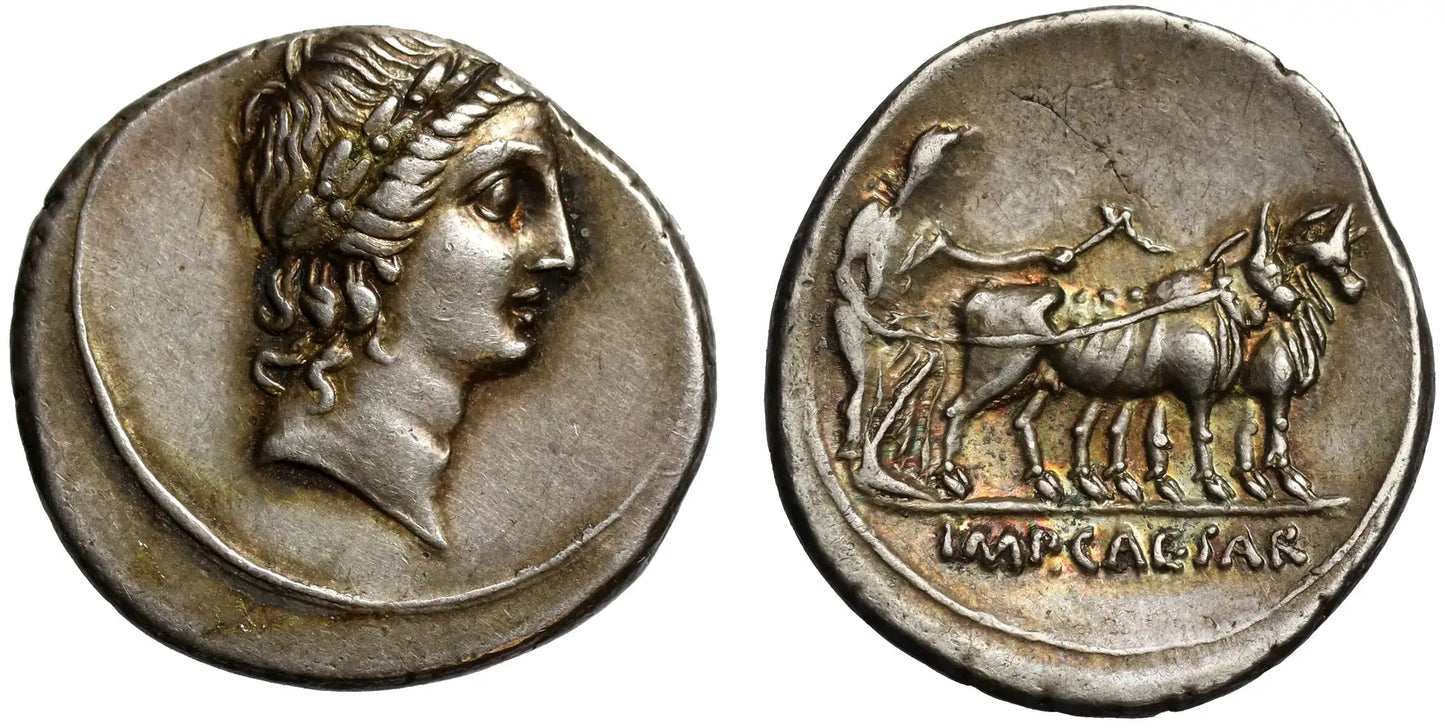
Augustus (27 BC-14 AD), silver Denarius, 30-29 BC, Italian mint, Apollo head right with laurel wreath, rev. IMP CAESAR, Augustus in oxen biga right with whip, 3.74g, 9h (BMC 638; Coh. 117; RIC² 272). Ex. the Coins and Medals AG Auction 19, Basel 1959, No. 180, Iridescent toning, obverse slightly off-centre otherwise about extremely fine.
This silver denarius of Augustus, minted in Italy around 30-29 BC, reflects the political transformation of Rome following the end of the Roman Republic and the rise of Augustus as its first emperor. The obverse depicts the head of Apollo facing right, wearing a laurel wreath. Apollo was an important deity in Roman religion, associated with music, prophecy, healing and divine protection. His appearance on the coin reflects Augustus's close association with the god, whom he particularly favoured and credited with supporting his rise to power.
The reverse depicts Augustus riding in a biga, a chariot drawn by two oxen, holding a whip. The inscription IMP CAESAR identifies him as Imperator Caesar. The image of the chariot may symbolise triumph, authority and the restoration of order following years of civil conflict. Its use of oxen, rather than the horses typically associated with military triumphs, also gives the scene a connection to Roman religious and ceremonial traditions.
The reverse inscription IMP CAESAR translates as "Imperator Caesar", referring to Octavian's military authority and political position. Importantly, the figure is not riding in a biga (two-horse chariot) but is traditionally interpreted as Octavian ploughing with a pair of oxen. This scene symbolises the foundation of a Roman colony or city, connecting him with Rome's origins and the restoration of Roman society after civil war.
The date of the coin is particularly significant because it was produced shortly after Octavian's victory over Mark Antony and Cleopatra at the Battle of Actium in 31 BC, which effectively ended the civil wars. In 30 BC, Egypt was brought under Roman control, leaving Octavian as the dominant political figure in the Roman world. The depiction of Apollo on the obverse is also associated with his victory at Actium, where Octavian credited Apollo with divine support.
Although Octavian did not formally receive the title Augustus until 27 BC, this coin illustrates the foundations of the political authority and image he would develop throughout his reign. It communicates themes of divine protection, renewal and the restoration of order, presenting Octavian as a leader capable of bringing stability to Rome after years of conflict. The denarius therefore provides an important example of how coinage was used to promote his legitimacy and establish the imagery of his emerging rule.
FAQs
What makes a coin valuable?
I have coins to sell, what’s the next step?
How will my purchases be shipped?
What happens if I’m not entirely happy with my purchase?
Popular Coins
View all-
Elizabeth II 2022 silver proof 2oz City Views London
Regular price £220Regular priceUnit price per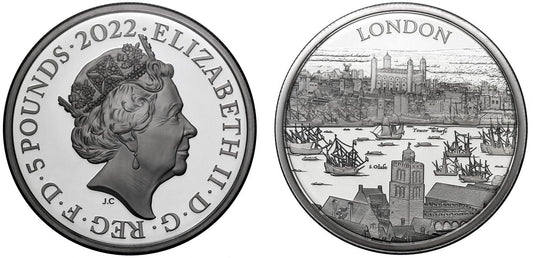
-
Charles III 2024 gold proof 1/4oz Britannia
Regular price £950Regular priceUnit price per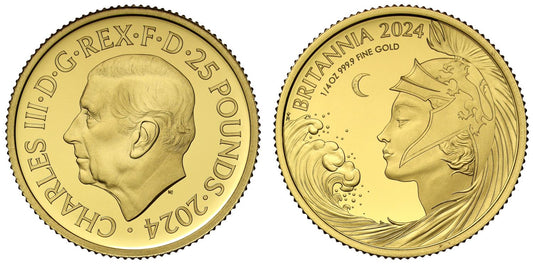
-
Charles III 2026 silver PF70 UCAM FDI Sovereign
Regular price £125Regular priceUnit price per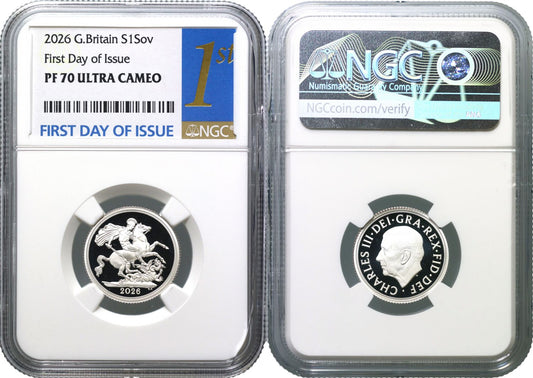
-
Charles III 2025 silver proof 2oz Waterloo Victory
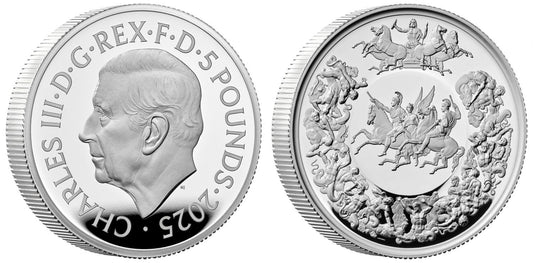
Regular price £260Regular priceUnit price per