 Search


FAQs
What makes a coin valuable?


I have coins to sell, what’s the next step?
How will my purchases be shipped?
What happens if I’m not entirely happy with my purchase?
Augustus, Gold Aureus, Lugdunum, provenance to 1974
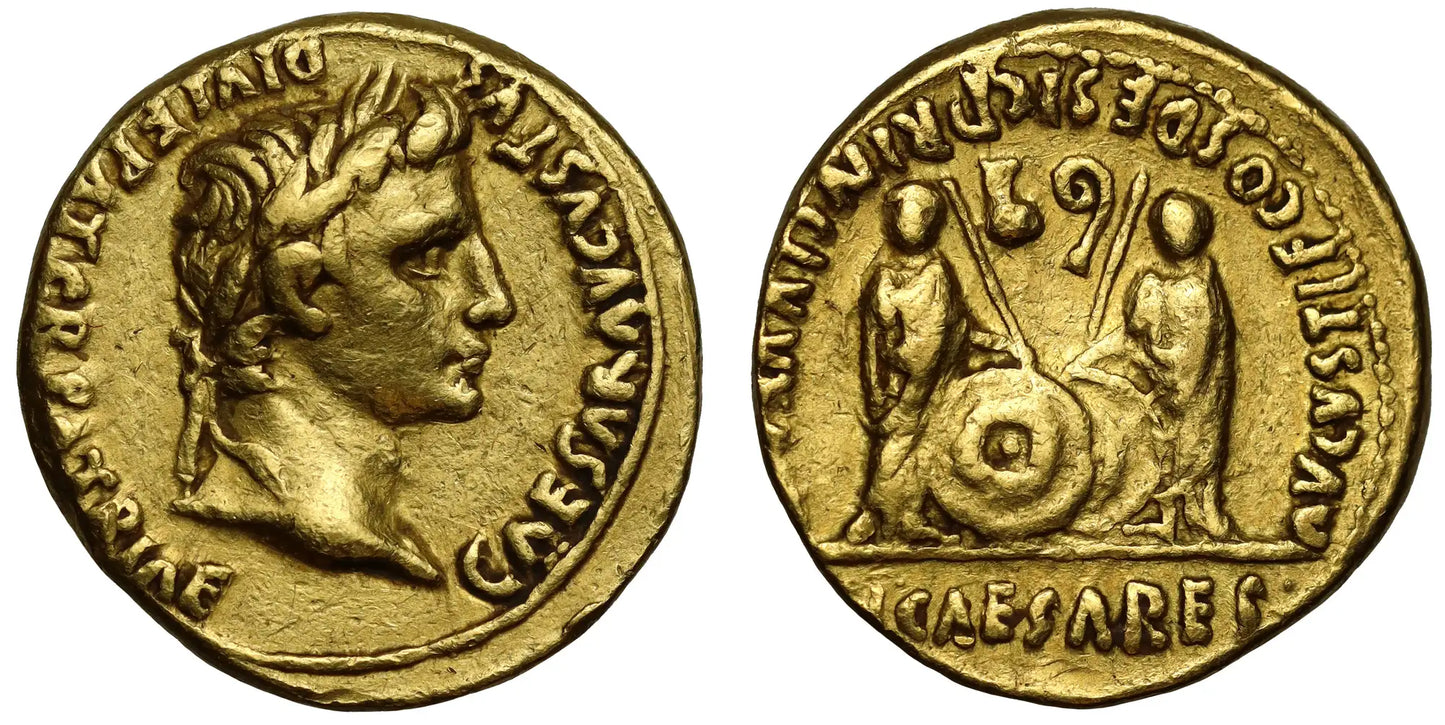
Augustus (27 BC - 14 AD), gold Aureus, struck 2 BC - 4 AD, Lugdunum mint, CAESAR AVGVSTVS DIVI F PATER PATRIAE, laureate head right, rev. AVGVSTI F COS DESIG PRINC IVVE[NT], Gaius and Lucius Caesar togate, standing facing, each resting hand on shield and spear, lituus and simpulum between them, [C] L CAESARES in exergue, 7.88g, 11h (RIC I 206; Calicó 176; Cohen 42; BMC 513). Struck a little off-centre, very fine with a bold portrait.
Provenance:
Ex Spink 119, 4th March 1997, lot 434: Kunst and Munzen 12, 23 May 1974, lot 670.
This gold aureus of Augustus, struck at Lugdunum between 2 BC and 4 AD, captures the power, ambition and extraordinary legacy of one of the greatest rulers in Roman history. The obverse bears a laureate portrait of Augustus, accompanied by the inscription CAESAR AVGVSTVS DIVI F PATER PATRIAE. This title reflects the immense prestige Augustus had accumulated, as well as his carefully cultivated image as the father and protector of the Roman people.
Augustus was, quite simply, an extraordinary man. Born Gaius Octavius, he rose from relative obscurity to become the first Roman emperor, transforming a fractured republic torn apart by civil war into a stable and powerful empire. Following the assassination of Julius Caesar, his adoptive father, Augustus demonstrated remarkable political intelligence, military determination and an almost unparalleled ability to consolidate power. His reign ushered in the Pax Romana, a prolonged period of relative peace and prosperity that would shape the Roman world for generations. His achievements in administration, architecture, infrastructure and imperial governance fundamentally changed Rome.
The reverse is equally fascinating, depicting his grandsons and adopted heirs, Gaius and Lucius Caesar, standing in togas with shields and spears. The surrounding inscription identifies them as consuls-designate and princes of the youth, emphasising Augustus's hopes for dynastic succession. The inclusion of the priestly implements, the lituus and simpulum, further reinforces their religious and political importance.
This aureus is therefore far more than a beautiful gold coin, it is a piece of imperial propaganda, celebrating Augustus's achievements while presenting the next generation of his dynasty. It captures the ambition, stability and enduring greatness of the Augustan age.
The obverse inscription CAESAR AVGVSTVS DIVI F PATER PATRIAE translates to "Caesar Augustus, son of the divine [Julius Caesar], Father of the Country."
The reverse inscription AVGVSTI F COS DESIG PRINC IVVENT / C L CAESARES translates to "Gaius and Lucius Caesars, sons of Augustus, consuls-designate, princes of the youth."
FAQs
What makes a coin valuable?
I have coins to sell, what’s the next step?
How will my purchases be shipped?
What happens if I’m not entirely happy with my purchase?
Popular Coins
View all-
Elizabeth II 2022 silver proof 2oz City Views London
Regular price £220Regular priceUnit price per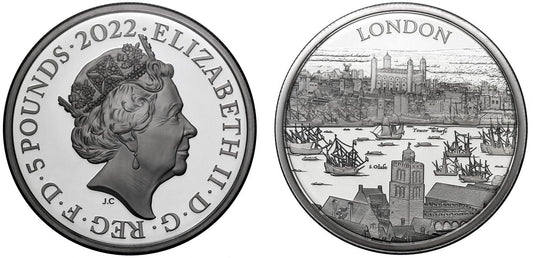
-
Charles III 2024 gold proof 1/4oz Britannia
Regular price £950Regular priceUnit price per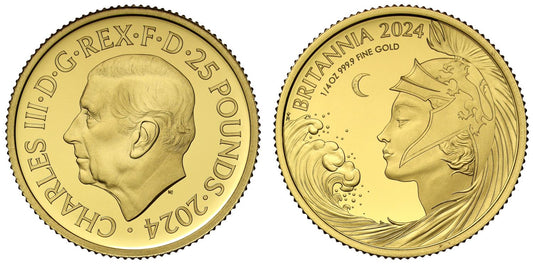
-
Charles III 2025 silver proof 2oz Waterloo Victory
Regular price £260Regular priceUnit price per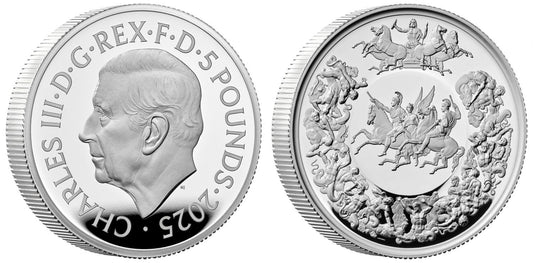
-
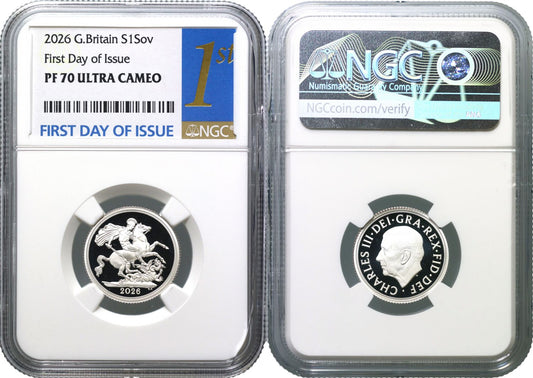
Charles III 2026 silver PF70 UCAM FDI Sovereign
Regular price £125Regular priceUnit price per