 Search


FAQs
What makes a coin valuable?


I have coins to sell, what’s the next step?
How will my purchases be shipped?
What happens if I’m not entirely happy with my purchase?
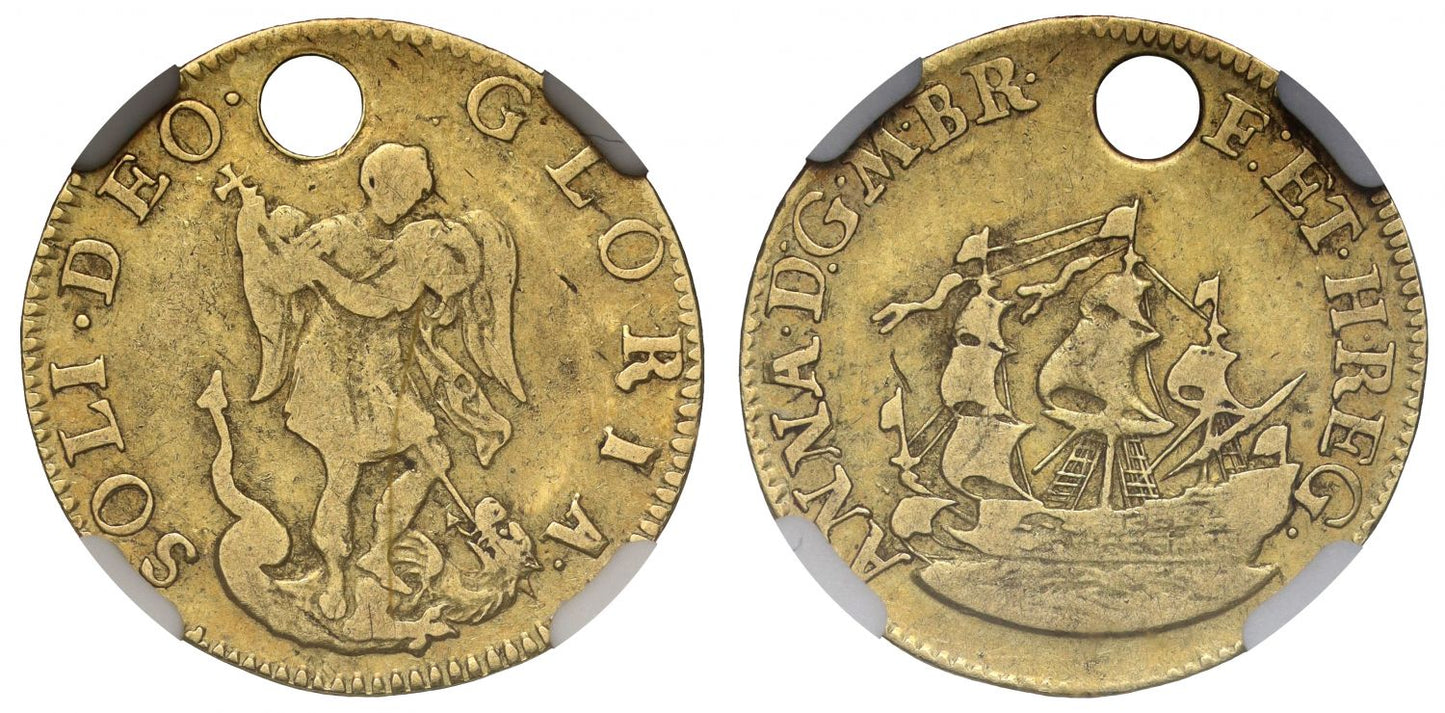
Anne pierced gold Touchpiece VF30
Anne (1702-14), pierced gold touchpiece by J Croker, officially pierced, toothed outer borders both sides, three masted ship in sail left, legend surrounds ANNA. D:G. M. BR. F: ET. H: REG : rev. St Michael standing spearing dragon, reads SOLI. DEO. GLORIA., weight 3.04g (MI.242-28; Woolf obv 6/ Rev 3). Old tone with wear to high points, straight graded by NGC as VF30.
NGC Certification 4913159-014
The legends translate as "Anne by the grace of God, Queen of Great Britain, France and Ireland" on obverse and on the reverse "Glory to God alone."
The so called "Kings Evil" or Morbus Regius also known as the disease scrofula was what the Royal touch from the monarch was purported to be able to cure. Since the time of King Edward the Confessor (later canonised) a belief in prayer coupled with the Royal touch could incur a miraculous recovery and it became usual to give money as alms to the afflicted, in the Middle Ages a Penny as a day's wages for a labourer. Later in the medieval period the gold Angel coin became prominent as the "doctors" coin as the 6s and 8d face value was the standard fee of a medical doctor at the time. The reverse legend of Angel coins was revered as a healing inscription coupled with St. Michael slaying the devil as a dragon. As the monarch was seen to have a divine right to Kingship and was related to the now Sainted King, the coin became effectively a healing amulet especially if the monarch had once touched it. The passing of a Touch-Piece therefore became more commonplace under the Stuart reigns of James I and Charles I, and at these times of plague and other disease it was sensible for the King to pass such Angel coins, rather than to touch those physically ailed, a social distance being maintained by the gift of coin. The recipient who may have cured from their ill would covet such a coin and wear it against their skin probably for the rest of their life, and this is why such coins are often holed. By the time of the later Stuart reigns of Charles II and James II the Angel coin was no longer in production as machinery had become the new norm at the Mint. A need to still touch for the Kings evil meant production of these special pieces as we have for sale herewith prevailed and there was even a gap left in the legend where the piercing would occur. The reverse depicts the warship "The Sovereign of the Seas" launched in October 1637 and in service until it was burned by fire in Chatham docks in 1697.
Noel Woolf reproduced the known mintages of the Queen Anne touch pieces which cover the time from February 1702 to May 1707 and from March 1711 to April 1714 which amounted to 12,347 pieces or an average of about 1,760 pieces a year. If the same average is applied to the missing accounts then the mintage in total must have been under 20,000 pieces for the entire reign at some 19,400 pieces and they remain incredibly rare.
Interestingly among those Queen Anne touched was Dr Samuel Johnson when aged 2 years probably on the 30thMarch 1712, who later went on the write the first English Dictionary and his own touch piece is in the British Museum. Queen Anne also was the last reigning monarch to touch on British soil on 27thApril 1714 three months before she passed away.
FAQs
What makes a coin valuable?
I have coins to sell, what’s the next step?
How will my purchases be shipped?
What happens if I’m not entirely happy with my purchase?
Popular Coins
View all-
Elizabeth II 2022 silver proof 2oz City Views London
Regular price £220Regular priceUnit price per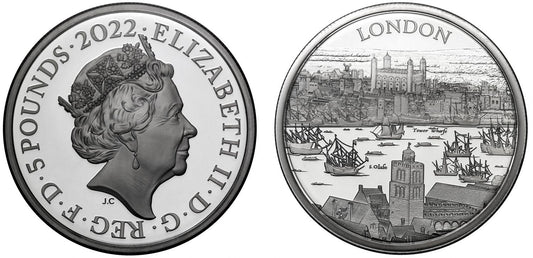
-
Charles III 2024 gold proof 1/4oz Britannia
Regular price £950Regular priceUnit price per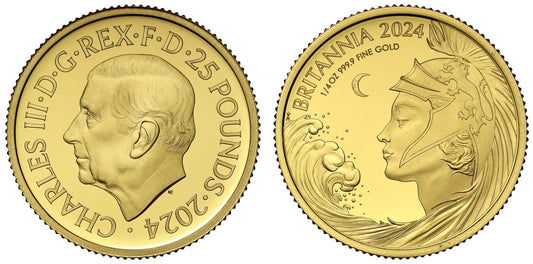
-
Charles III 2025 silver proof 2oz Waterloo Victory
Regular price £260Regular priceUnit price per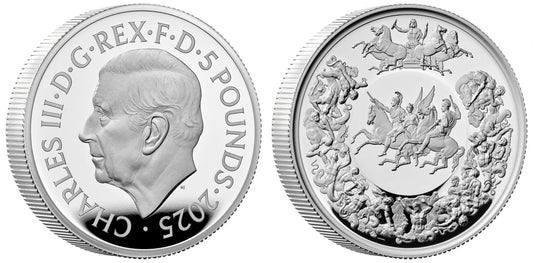
-
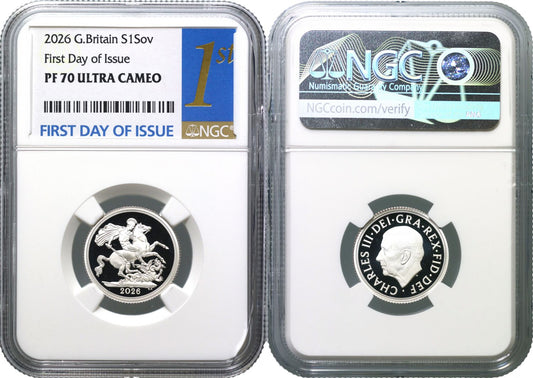
Charles III 2026 silver PF70 UCAM FDI Sovereign
Regular price £125Regular priceUnit price per