 Search


FAQs
What makes a coin valuable?


I have coins to sell, what’s the next step?
How will my purchases be shipped?
What happens if I’m not entirely happy with my purchase?
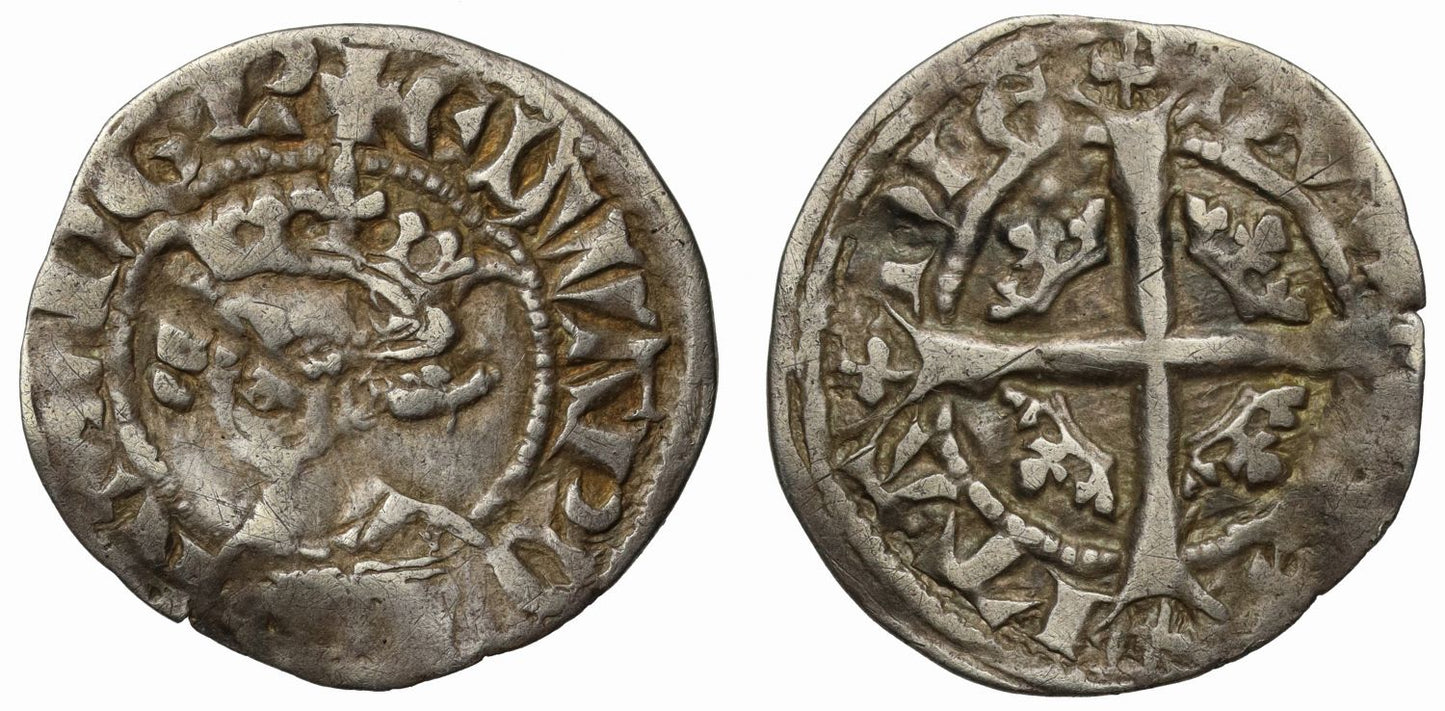
Anglo-Gallic, Edward III silver Demi-Sterling, very rare denomination
Anglo-Gallic, Edward III (1327-77), silver Demi-Sterling, Aquitaine, issued c.1337, three-quarter facing crowned bust to left with shoulders intruding beaded circle and legend surrounding, lion left below bust, +EDWARD REX ANGL', rev. long cross pattée with trefoils at terminals, crown in each inner angle, beaded circles and legend around, DVX AQV ITA Nie, weight 0.50g (Elias 57; AGC 57 dies 1/a; S.8048). A little weakly struck around one third of legend, otherwise about very fine and a rarely seen issue, the first we have offered for sale.
The legends translate as "Edward King of the English" on obverse and as "Duke of Aquitaine" on the reverse. These well rendered high quality silver coins issued as a Sterling or Demi-Sterling are strikingly different to anything else issued for use in Aquitaine at this time. Most interestingly surviving examples from hoards or single finds have apparently never been found in France. They seem to be an issue made with a lot more care and attention than for anything in Aquitaine or anywhere in England at that time, with a design that really attempts to give a life-like portrait of the King. The silver content is somewhat akin to coinage that was starting to appear in Scotland in the 1330s and that of Edward III's Florin coinage from 1344, but also to a coinage from London from 1325 of Maille Blanche coins by Lapin Roger. Withers and Ford theorise that the origin of this issue maybe in what Rev. Ruding wrote in his "Annals of the Coinage of Great Britain" (3rd edition page 212) where he states in November 1337 according to Grafton that the King was made Vicar-General and Lieutenant to the Emperor with power to coin money of gold and silver which subsequently happened in Antwerp as the King kept his Winter at Louvain. Froissart also mentions this fact and it could be that Sterlings and Demi-Sterlings formulate this coinage. The gold coins he had the power to strike are likely to be the 1338 issue of Ecus in the name of Louis of Bavaria known to have been struck in Antwerp. If this sterling coinage is the silver component they would never have circulated in Aquitaine hence why they have never been found in France nor mentioned in the surviving coinage accounts of the area or England. They would likely have been used in payment for Edward III's armies in the low countries as the denomination was a northern European one that was widespread. Sterling coins have been found in the ground in England, Scotland, Scandinavian, Germany and the Low Countries.
Provenance:
With an old ticket from dealer Mike Vosper.
FAQs
What makes a coin valuable?
I have coins to sell, what’s the next step?
How will my purchases be shipped?
What happens if I’m not entirely happy with my purchase?
Popular Coins
View all-
Elizabeth II 2022 silver proof 2oz City Views London
Regular price £220Regular priceUnit price per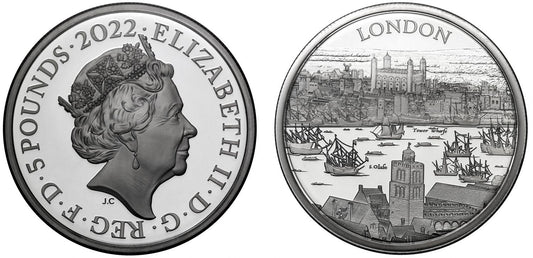
-
Charles III 2024 gold PF70 UC 1/4oz Britannia
Regular price £1,040Regular priceUnit price per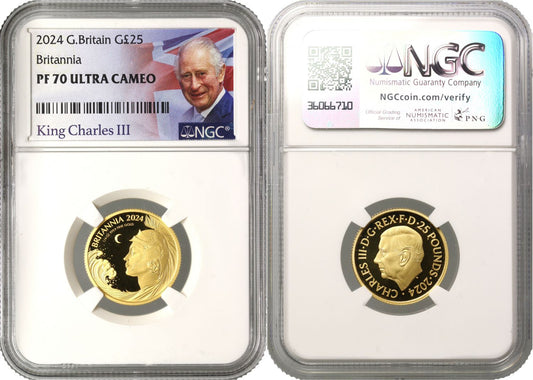
-
Charles III 2024 gold proof 1/4oz Britannia
Regular price £990Regular priceUnit price per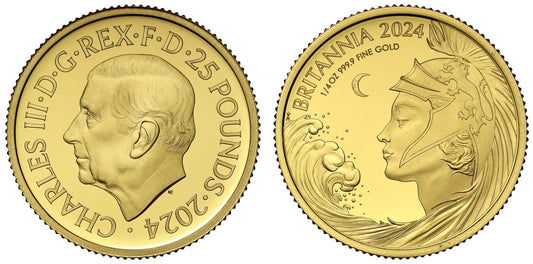
-
Charles III 2025 silver proof 2oz Waterloo Victory
Regular price £260Regular priceUnit price per