 Search


FAQs
What makes a coin valuable?


I have coins to sell, what’s the next step?
How will my purchases be shipped?
What happens if I’m not entirely happy with my purchase?
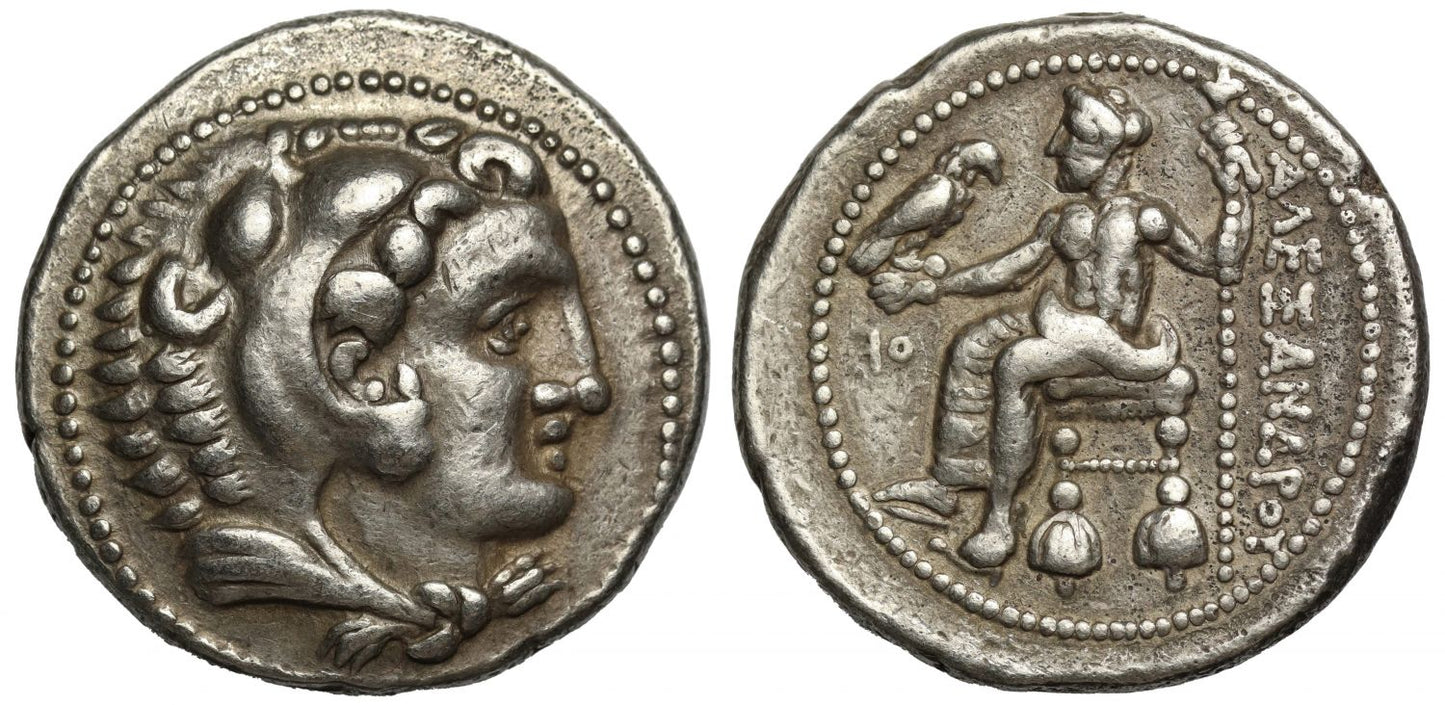
Alexander The Great, Lifetime Issue Silver Tetradrachm, Tyre.
Kings of Macedon, Alexander III 'the Great' (336-323 BC), lifetime issue silver Tetradrachm, Tyre, c. 330-327, head of Herakles wearing lion skin headdress right, rev. AΛEΞANΔPOY, Zeus enthroned left, holding long sceptre and eagle, in left field, Phoenician 'K (-|O), 16.66 g, 6h (Price 3248 'Ake'). Minor porosity, good very fine.
This silver tetradrachm of Alexander the Great was struck at Tyre around 330-327 BC during his lifetime. It belongs to the extensive coinage issued to support the financial needs of Alexander's rapidly expanding empire. Tyre, one of the great Phoenician cities of the eastern Mediterranean, was an important commercial and minting centre, making it a significant location for the production of Alexander's coinage.
The obverse depicts the head of Herakles facing right, wearing the skin of the Nemean lion as a headdress. Herakles was one of the most celebrated heroes of Greek mythology and was renowned for his strength and legendary labours. His image appears on a vast number of Alexander's tetradrachms and provided a powerful heroic association for the king. The youthful, idealised features of Herakles also reflect the sophisticated artistic traditions of the Greek world.
The reverse bears the inscription AΛEΞANΔPOY, meaning "of Alexander," and shows Zeus seated on a throne facing left. He holds a long sceptre in one hand and an eagle in the other, presenting an image of divine authority and stability. The combination of Herakles and Zeus became the defining design of Alexander's silver tetradrachms and continued to be used extensively after his death by rulers and cities across the Hellenistic world.
The Phoenician symbol in the left field is particularly important for identifying the Tyre mint. Such marks and symbols were used to distinguish different mints and issues within Alexander's enormous coinage system. Tyre itself had been a major centre of Phoenician trade and culture for centuries, and its incorporation into Alexander's empire followed his famous siege and capture of the city in 332 BC.
The fact that this is a lifetime issue makes the coin especially significant. It was produced while Alexander was still alive and actively expanding his empire across the eastern Mediterranean and Asia. By the time this coin was struck, his armies had already defeated the Persian forces in several major battles, and Alexander controlled vast territories formerly belonging to the Achaemenid Empire.
FAQs
What makes a coin valuable?
I have coins to sell, what’s the next step?
How will my purchases be shipped?
What happens if I’m not entirely happy with my purchase?
Popular Coins
View all-
Elizabeth II 2022 silver proof 2oz City Views London
Regular price £220Regular priceUnit price per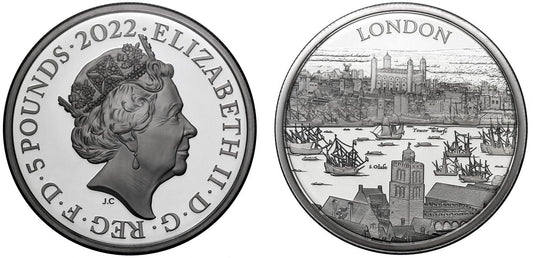
-
Charles III 2024 gold proof 1/4oz Britannia
Regular price £950Regular priceUnit price per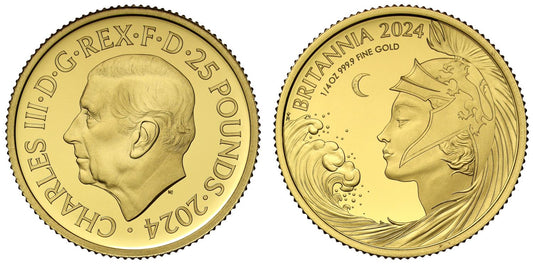
-
Charles III 2025 silver proof 2oz Waterloo Victory
Regular price £260Regular priceUnit price per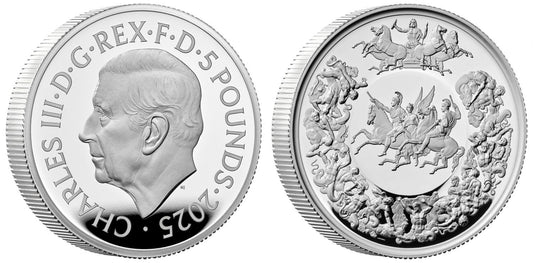
-
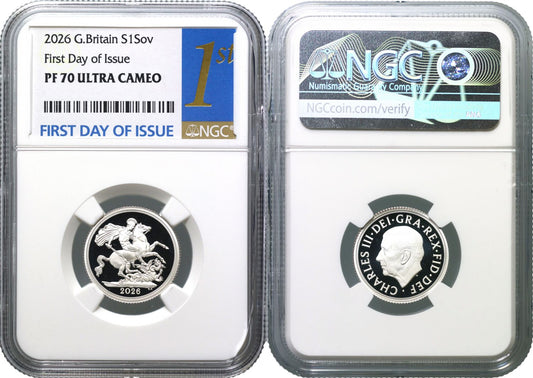
Charles III 2026 silver PF70 UCAM FDI Sovereign
Regular price £125Regular priceUnit price per