 Search


FAQs
What makes a coin valuable?


I have coins to sell, what’s the next step?
How will my purchases be shipped?
What happens if I’m not entirely happy with my purchase?
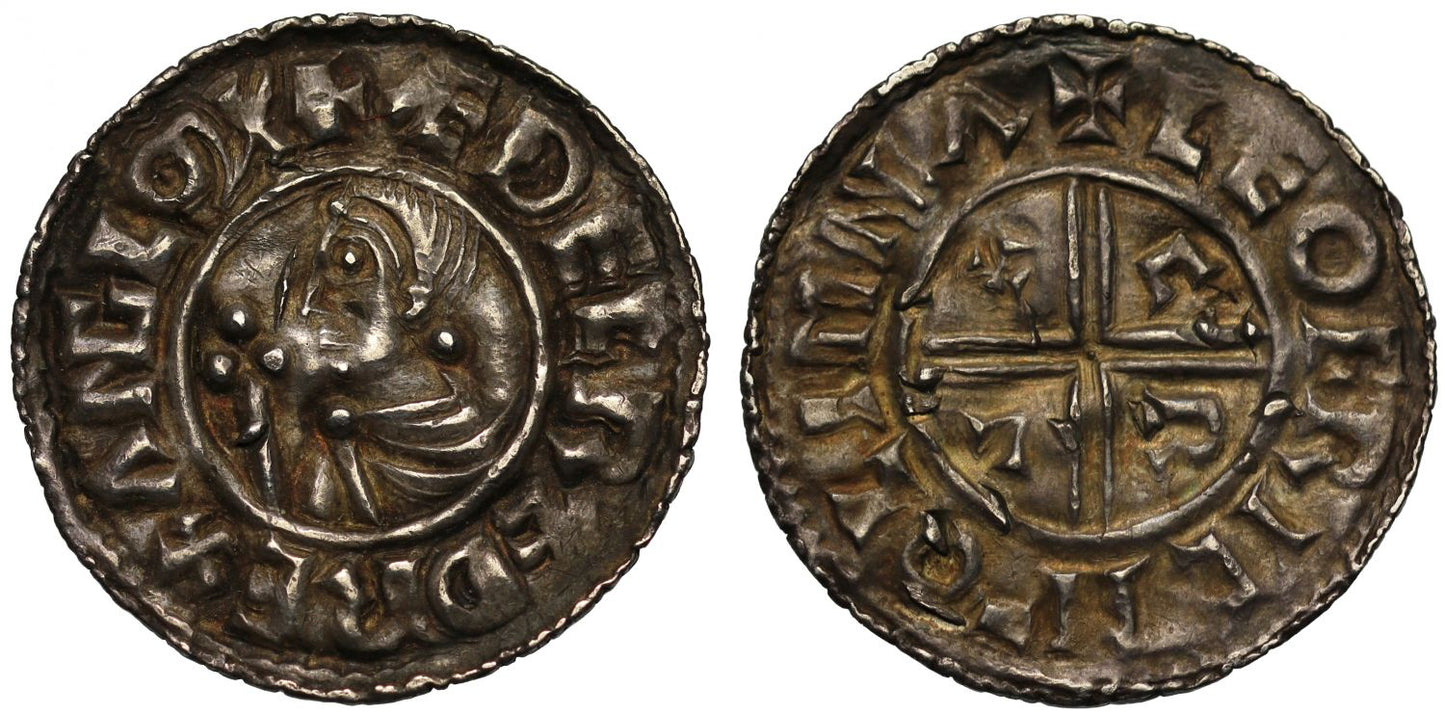
Aethelred II, Penny, CRVX type, Lympne Mint, Moneyer Leofric
Aethelred II (978-1016), silver Penny, large CRVX type (c.991-997), Lympne Mint, Moneyer Leofric, draped bust left with sceptre, linear circle and legend surrounding, +ÆÐELRÆD REX ANGLORX, ORX ligatured, rev. voided cross within linear circle, CRVX letters in consecutive angles, +LEOFRIC M-O LIMNA, weight 1.58g (BMC III, p.200; BEH 839; SCBI 30:420 American; N.770; S.1148). Dark tone, a couple of peck marks each side, otherwise a bold to good very fine and a rare Mint.
North lists 73 named mints in operation during the reign of Aethelred II with a further 14 unallocated. According to North Lympne operates with seven moneyers in all types except the latter helmet and last small cross types.
Though Aethelred enjoyed such a long reign he was known as "The Unready" literally meaning ill-counselled from a history of bad advice and decision making. Born circa 967 Aethelred was supported by his mother and partisans that were led by Earl Aelfhere of Mercia; ascending the throne at no more than 12 years of age after the murder of his Half-Brother Edward at Corfe. The influential Aelfhere having died in 983 meant Aethelred became more vulnerable, and the Vikings began to start their raids once again. Aethelred chose to pay off the raiders rather than resist, becoming known for giving such ransoms payments willingly. This meant many hundreds of thousands of coins ended up being taken to Scandanavia where they were hoarded and why much of the coinage that survives today often exhibits "peck marks" where the Viking bankers have inserted a knife point to make sure the metal quality was good. The harrying continued until Swein Forkebeard held a great swathe of England by 1013, and Aethelred was under threat in London retreating to the Isle of Wight. England submitted to Swein but he died suddenly on the 2nd February 1014 at Gainsborough giving Aethelred the advantage and driving the Vikings out. Canute the second son of Swein, returned to attack in 1015 and by early 1016 was marching on Mercia, Aethelred however passed away on 23rd April 1016 in London at around the age of 52 just as his second son Edmund was moving south to link up with the army. Edmund was elected King, but the army was his priority, and after winning a few battles suffered a defeat at Ashingdon on 18th October 1016. He retreated possibly wounded to West Mercia and negotiated a treaty giving him rule of Wessex. However, Edmund died in Oxford on the 30th November 1016 giving control to Canute.
The Kentish Mint of Lympne is a village today, three miles to the west of the town of Hythe where minting activity later transferred from the time of Edward the Confessor perhaps as it is situated on the coast. The Lympne Mint is in operation from the reign of Aethelstan until Canute, The Danes arrived there in 893 and there are some die links in the pennies of Aethelred II with the Canterbury Mint.
The legends translate as "Aethelred King of the English" on obverse and "Leofric of Lympne" on the reverse, the letters around the central cross mean "cross."
Provenance:
Ex H. W. Taffs, Glendining, 21st November 1956, lot 79, sold for £19.
Ex Spink Coin Auction, 25th September 2018, lot 1581.
Ex Collection of an English Doctor, part one, Sovereign Rarities, London, March 2022.
FAQs
What makes a coin valuable?
I have coins to sell, what’s the next step?
How will my purchases be shipped?
What happens if I’m not entirely happy with my purchase?
Popular Coins
View all-
* Elizabeth II 2022 silver proof 2oz City Views London
Regular price £220Regular priceUnit price per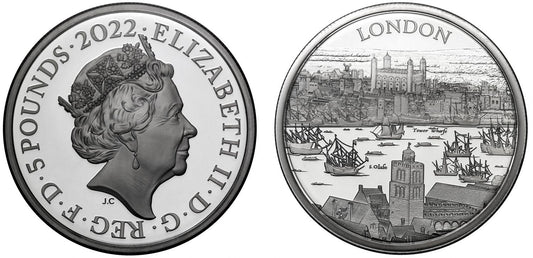
-
* Charles III 2024 gold PF70 UC 1/4oz Britannia
Regular price £1,115Regular priceUnit price per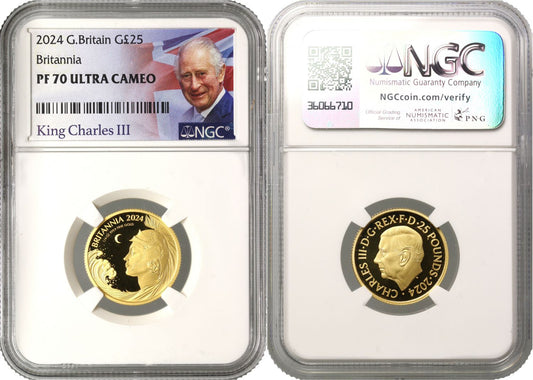
-
* Charles III 2024 gold proof 1/4oz Britannia
Regular price £1,065Regular priceUnit price per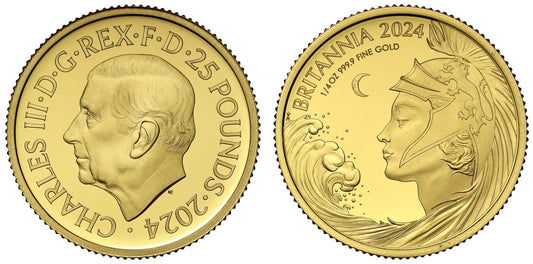
-
* Charles III 2025 silver proof 2oz Waterloo Victory
Regular price £255Regular priceUnit price per