 Search


FAQs
What makes a coin valuable?


I have coins to sell, what’s the next step?
How will my purchases be shipped?
What happens if I’m not entirely happy with my purchase?
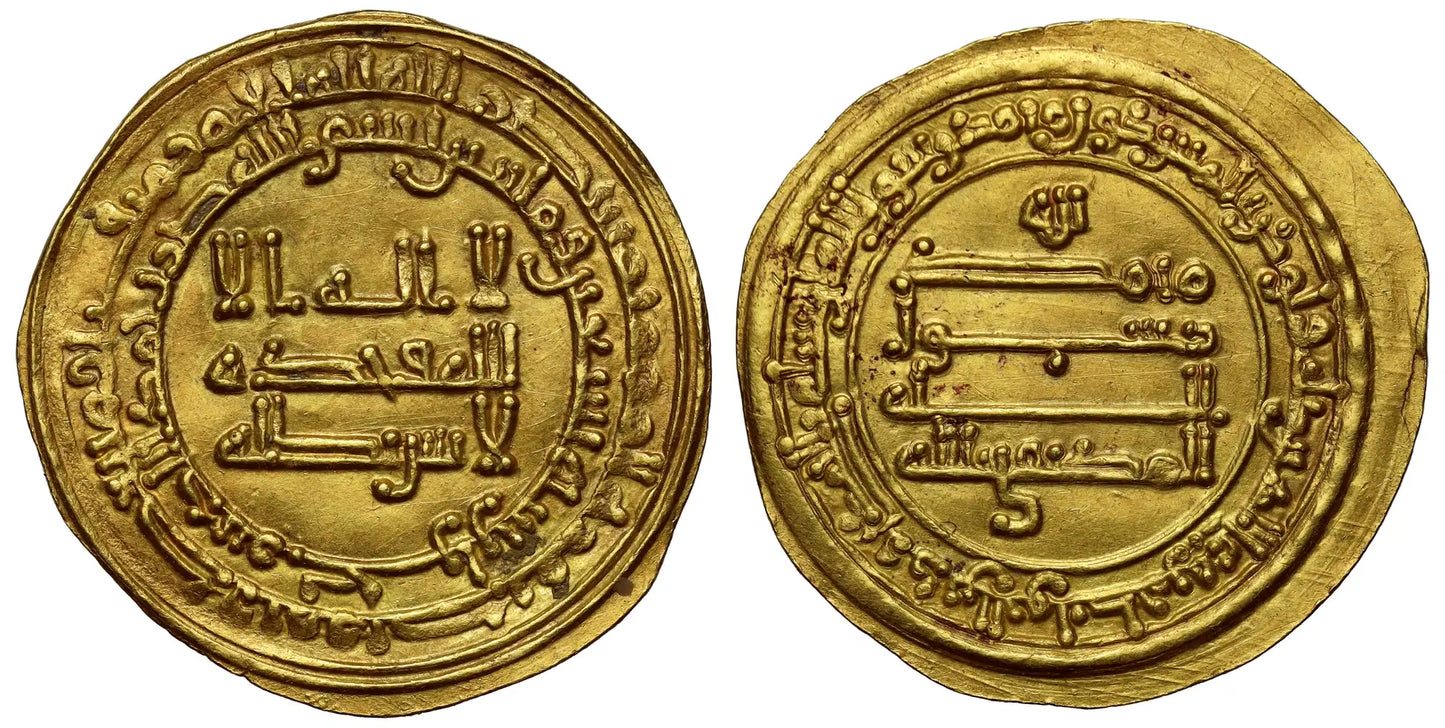
Abbasid, al-Muktafi billah, Gold Dinar, Haran, AH 290.
Abbasid, al-Muktafi billah (AH 279-289 / 892-902 AD), gold Dinar, Haran (Harran), AH 290, 3.67g, 5h, 26mm (Album 243.1 Bernardi 226Hj; Alajlan Collection g290/4). Extremely fine, rare.
Provenance:
Ex Savoca Herakles Auction 1, 14 October 2024, lot 109
Ex Morton & Eden, Auction 103, 24 October 2019, lot 41
Abbasid coins of this period reach a zenith of style and production quality where even currency issues have the look of donatives. The present coin is not a donative but nevertheless boasts clear engraving and a broad flan. Harran is in present day Turkey. One theory though is that all the coinage of al-Mu'tadid was struck from dies engraved in one place then distributed for use at their respective mints. This would explain the consistent high quality of production - a small number of highly skilled die engravers working together to the same exacting standards.
As early as 2000 BC, Harran claimed a close affiliation with the Moon God, Nana/Sin, and was widely respected in the region for this reason before the advent of the Abrahamic religions. Genesis cites the city as the home of Abraham before he travelled to Canaan. Julian the Apostate sought the advice of oracles at Harran, which means it had retained its astral religion / pagan culture well after Rome had converted to Christianity. When Islam spread throughout the region a portion of the city's population avoided conversion to Islam, or Judaism or Christianity (or death), by claiming, perhaps opportunistically, that they were the enigmatic Ṣābiʾun, and therefore in fact protected as people of the book. If its inhabitants studied the night sky, they were also mathematicians and for a time in the 9th and 10th centuries Harranians who had settled in Baghdad, perhaps following Thabit ibn Qurra, had become influential at court and made a lasting contribution to the study of mathematics and medicine. No doubt the location of the city was also influential in protecting its inhabitants and it continued to be an important centre for trade, learning and culture. Saladin enlarged its mosque. Ultimately though, the Mongol invasion of 1260 left it too badly damaged and depopulated for it to maintain its status as a great city although today there is still a population of some 96,000 people living there.
FAQs
What makes a coin valuable?
I have coins to sell, what’s the next step?
How will my purchases be shipped?
What happens if I’m not entirely happy with my purchase?
Popular Coins
View all-
Elizabeth II 2022 silver proof 2oz City Views London
Regular price £220Regular priceUnit price per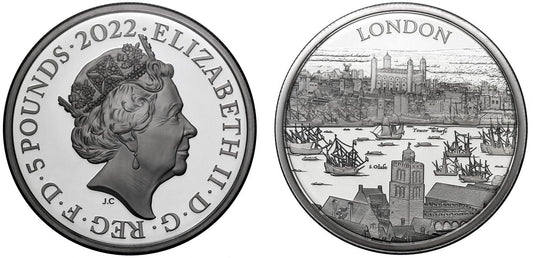
-
Charles III 2024 gold proof 1/4oz Britannia
Regular price £950Regular priceUnit price per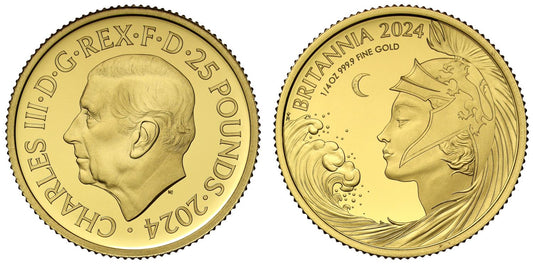
-
Charles III 2025 silver proof 2oz Waterloo Victory
Regular price £260Regular priceUnit price per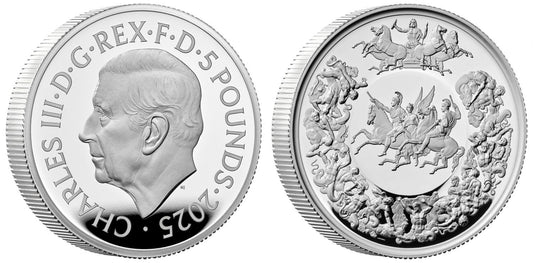
-
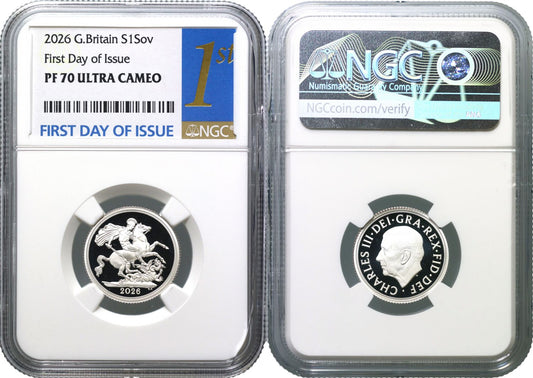
Charles III 2026 silver PF70 UCAM FDI Sovereign
Regular price £125Regular priceUnit price per