 Search


FAQs
What makes a coin valuable?


I have coins to sell, what’s the next step?
How will my purchases be shipped?
What happens if I’m not entirely happy with my purchase?
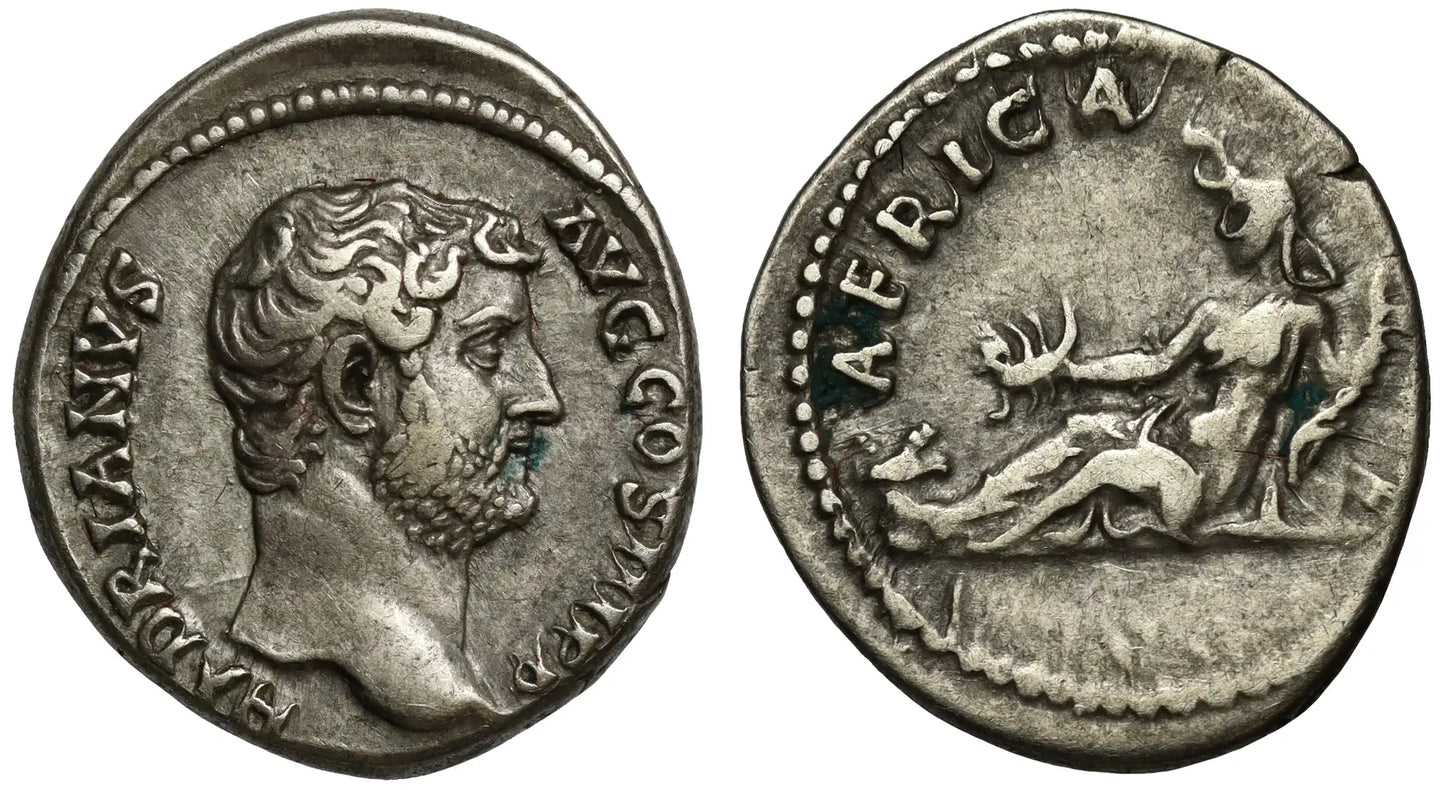
Hadrian, Silver Denarius, Travel Series, Africa
Hadrian (117-138 AD), "travel series" silver Denarius, Rome, circa 130-133 AD, HADRIANVS AVG COS III P P, bare head right, rev. AFRICA, Africa, wearing elephant-skin headdress, reclining left against rock, holding scorpion in her right hand and cornucopiae in her left, at her feet, modius with grain ears, 3.35g, 7h (BMC 812. Cohen 140. RIC 1495). Good very fine/very fine.
This silver denarius belongs to Hadrian's celebrated "travel series," struck at Rome around 130-133 AD to commemorate the emperor's extensive journeys throughout the Roman Empire. The obverse presents a bare-headed Hadrian facing right, with the inscription HADRIANVS AVG COS III P P.
The reverse is inscribed AFRICA and depicts the personification of Africa reclining against a rock. She wears a distinctive elephant-skin headdress and holds a scorpion in her right hand and a cornucopia in her left. At her feet is a modius containing grain ears, emphasising Africa's importance as a major agricultural and grain-producing region of the Roman Empire. The imagery combines geographical symbolism with references to the wealth and resources of the province.
Hadrian was renowned for travelling extensively throughout the empire, visiting provinces in Europe, Asia and Africa. His journeys were not simply recreational, they allowed him to inspect the military frontiers, meet local communities, oversee administration and commission major building projects. He visited North Africa during his travels, and the AFRICA type forms part of a wider group of coins representing the provinces and regions he visited.
The elephant-skin headdress is one of the most recognisable attributes of Africa in Roman art and coinage, while the cornucopia represents abundance and prosperity. The grain-filled modius is particularly appropriate to Africa, which had become one of Rome's principal sources of grain. The scorpion may allude to the region's distinctive wildlife and exotic character.
This denarius is therefore more than a representation of a Roman province. It forms part of Hadrian's broader programme of presenting himself as an emperor who personally travelled throughout and engaged with the territories under his rule. The series provides a fascinating visual record of the diversity of the Roman Empire and Hadrian's relationship with its provinces.
The obverse inscription HADRIANVS AVG COS III P P translates to "Hadrian Augustus, Consul for the third time, Father of the Nation."
FAQs
What makes a coin valuable?
I have coins to sell, what’s the next step?
How will my purchases be shipped?
What happens if I’m not entirely happy with my purchase?
Popular Coins
View all-
Elizabeth II 2022 silver proof 2oz City Views London
Regular price £220Regular priceUnit price per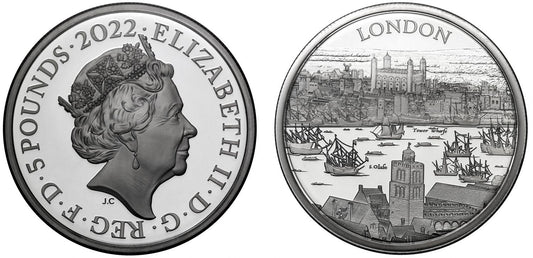
-
Charles III 2024 gold PF70 UC 1/4oz Britannia
Regular price £1,020Regular priceUnit price per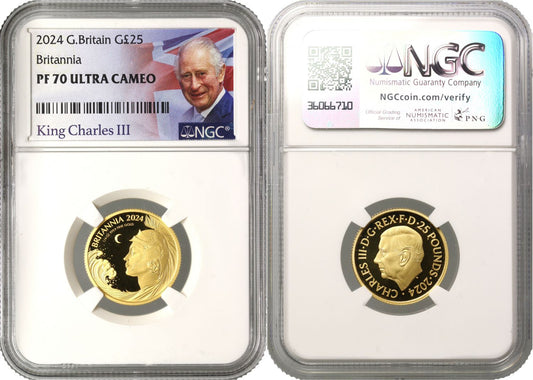
-
Charles III 2024 gold proof 1/4oz Britannia
Regular price £950Regular priceUnit price per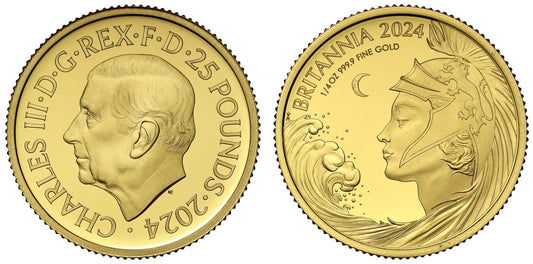
-
Charles III 2025 silver proof 2oz Waterloo Victory
Regular price £260Regular priceUnit price per