 Search


FAQs
What makes a coin valuable?


I have coins to sell, what’s the next step?
How will my purchases be shipped?
What happens if I’m not entirely happy with my purchase?
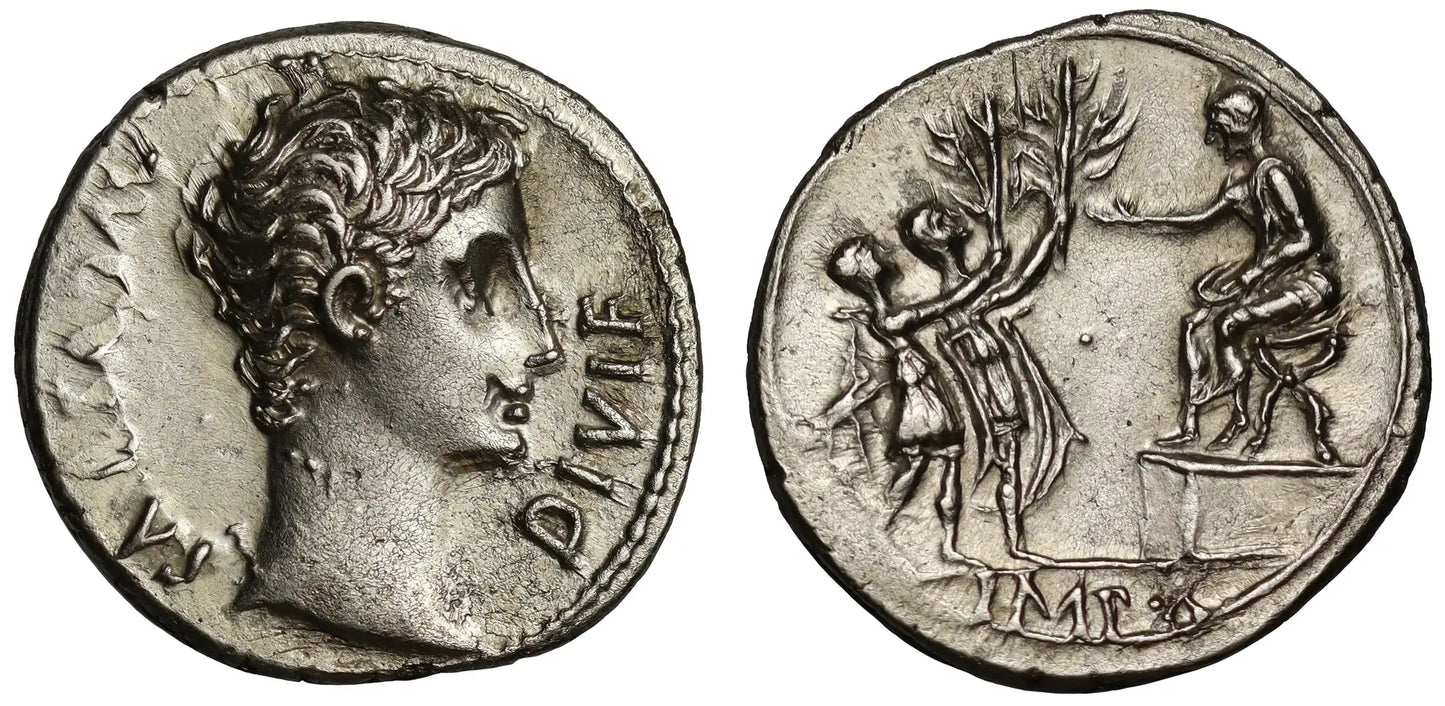
Augustus, Silver Denarius, Lugdunum
Octavian as Augustus (27 BC - 14 AD), silver Denarius, Lugdunum 15-13 BC, AVGVSTVS DIVI·F, bare head right, rev. two soldiers (or Drusus and Tiberius) with parazonium offering branches to Augustus seated left on a platform; in exergue, IMP·X, 3.74g, 7h (BMC 445. RIC 165a. CBN 1366). Rare and in exceptional condition for the issue, extremely fine.
This silver denarius was struck at Lugdunum, modern-day Lyon, between 15-13 BC, during the reign of Augustus, Rome's first emperor. The obverse shows the bare head of Augustus facing right, with the inscription AVGVSTVS DIVI·F. The title refers to his adoption by Julius Caesar, who had been officially deified after his death, and reinforces Augustus' position as the legitimate heir to Caesar's legacy.
The reverse depicts Augustus seated left on a raised platform, receiving two soldiers who approach him carrying branches and parazonia. The figures are generally identified as soldiers, although they have also been interpreted as Augustus' stepsons and future successors, Drusus and Tiberius. The scene is accompanied by the inscription IMP·X, referring to Augustus' tenth acclamation as Imperator. The imagery celebrates military success and the loyalty of the Roman army while presenting Augustus as the central figure to whom victory and honour are directed.
Augustus came to power following the assassination of Julius Caesar in 44 BC. Originally known as Octavian, he defeated Caesar's assassins before forming the Second Triumvirate with Mark Antony and Lepidus. His eventual rivalry with Antony culminated in the Battle of Actium in 31 BC, where Octavian's forces achieved a decisive victory. Following Antony and Cleopatra's deaths, Octavian became the undisputed master of the Roman world.
In 27 BC, the Senate granted him the name Augustus, marking the beginning of the Roman Empire. Although he maintained the outward institutions of the Republic, Augustus established a new system of imperial government that endured for centuries. By the time this denarius was struck, his position was firmly established, and the coin's imagery reflects the themes central to his rule: military victory, dynastic succession, and the loyalty of the Roman army.
The possible identification of the two figures as Drusus and Tiberius is particularly important, as both men were closely associated with Augustus' military successes and would become important figures in the succession of the Julio-Claudian dynasty.
The obverse inscription AVGVSTVS DIVI·F translates to "Augustus, son of the divine one."
The Reverse inscription IMP X translates to "Emperor acclaimed for the tenth time."
FAQs
What makes a coin valuable?
I have coins to sell, what’s the next step?
How will my purchases be shipped?
What happens if I’m not entirely happy with my purchase?
Popular Coins
View all-
Elizabeth II 2022 silver proof 2oz City Views London
Regular price £220Regular priceUnit price per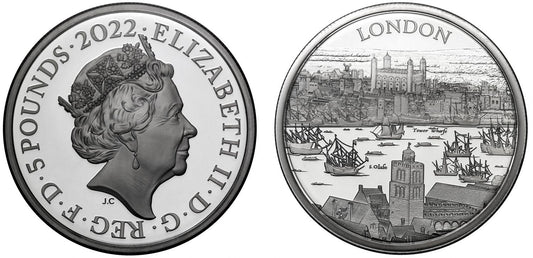
-
Charles III 2024 gold PF70 UC 1/4oz Britannia
Regular price £1,020Regular priceUnit price per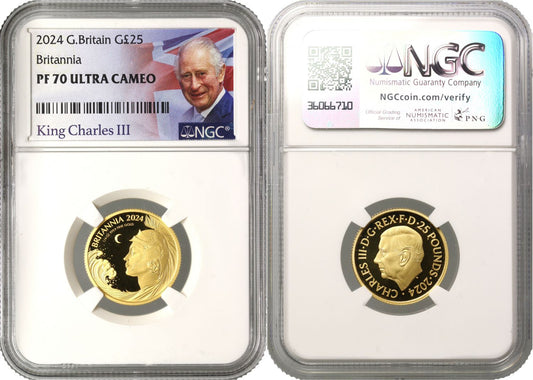
-
Charles III 2024 gold proof 1/4oz Britannia
Regular price £950Regular priceUnit price per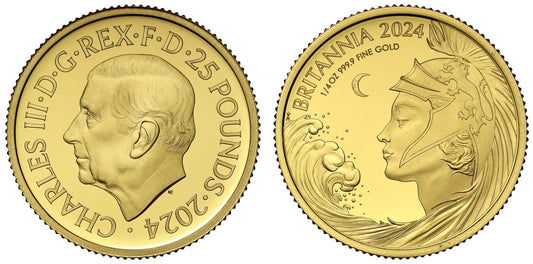
-
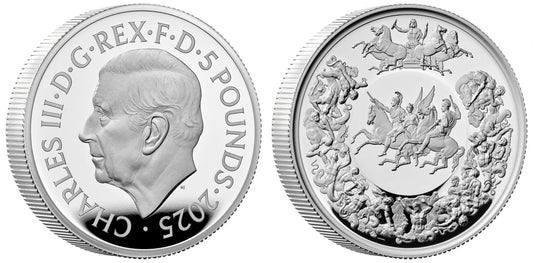
Charles III 2025 silver proof 2oz Waterloo Victory
Regular price £260Regular priceUnit price per